Showing posts with label Argentina. Show all posts

Tuesday, May 12, 2020

May 12. On this date in 1943, Shoghi Effendi cabled Argentine Bahá'ís he was "delighted (at the) completion (and) dedication (of the) Maxwell Memorial," which was dedicated to his mother-in-law who had died there three years previously of a heart attack during a teaching trip. Shoghi Effendi declared her a martyr.


May 12. On this date in 1943, Shoghi Effendi cabled Argentine Bahá'ís he was "delighted (at the) completion (and) dedication (of the) Maxwell Memorial," which was dedicated to his mother-in-law who had died there three years previously of a heart attack during a teaching trip. Shoghi Effendi declared her a martyr.
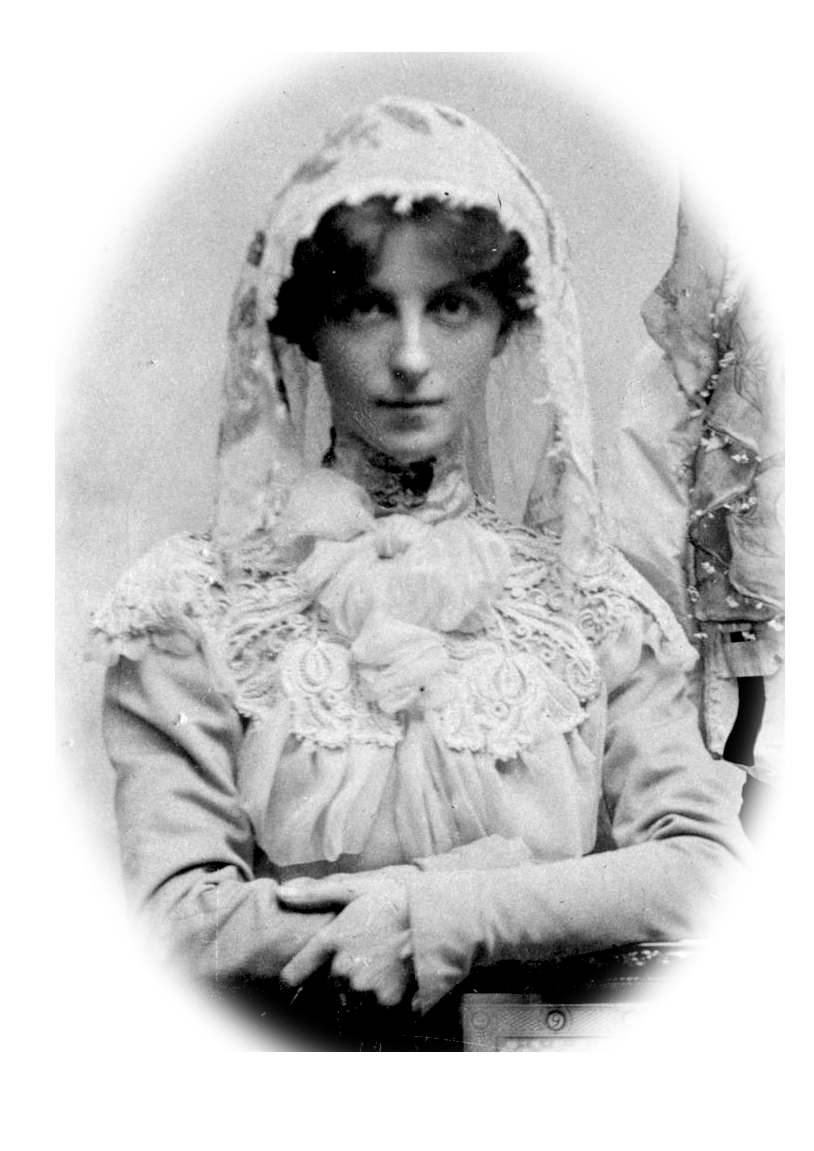
May Maxwell was born in Englewood, New Jersey on January 14, 1870. An early American Bahá'í, she was married to Hand of the Cause of God William Sutherland Maxwell, who designed the Shrine of the Báb, and was the mother of Mary Maxwell, the future Amatu'l-Bahá Rúhíyyih Khánum.
The Sutherland's were active Bahá'ís throughout their lives. For example, on September 2, 1912, during his tour of North America, 'Abdu'l-Bahá gave a talk in the Maxwell's Montreal home where he presented his views on native cultures, Africans, indigenous North Americans and pre-Columbian America.
May Maxwell died on March 1, 1940, of a heart attack in Buenos Aires, Argentina, where she was teaching the Faith. Shoghi Effendi, her son-in-law, gave her the status of martyr.
Shortly after May Maxwell's death in Buenos Aires, Argentina, on March 1, 1940, plans were made for the construction of a memorial at her gravesite. Designed by her husband, William Sutherland Maxwell, and approved by Shoghi Effendi, the memorial was dedicated on May 10, 1943 by the Bahá'ís of Buenos Aires at Quilmes Cemetery on behalf of the Bahá'ís of North an south America.
On May 12 1943, Shoghi Effendi cabled Argentine Bahá'ís he was "delighted (at the) completion (and) dedication (of the) Maxwell Memorial.
12 MAY 1943
DELIGHTED COMPLETION DEDICATION MAXWELL MEMORIAL SYMBOLIC ACT NOBLY CONSUMMATED CONVEY BUENOS AIRES ASSEMBLY CONGRATULATIONS GRATITUDE ASSURANCE LOVING PRAYERS SPIRITUAL PARTICIPATION HISTORIC CEREMONY. APPRECIATE PHOTOGRAPHS DEDICATION GATHERING.
Shortly after May Maxwell's death in Buenos Aires, Argentina, on March 1, 1940, plans were made for the construction of a memorial at her gravesite. Designed by her husband, William Sutherland Maxwell, and approved by Shoghi Effendi, the memorial was dedicated on May 10, 1943 by the Bahá'ís of Buenos Aires at Quilmes Cemetery on behalf of the Bahá'ís of North an south America.
Keith Ransom-Kehler, who died of small pox in Isfahan on October 23, 1933, is considered the first American Bahá’í martyr.
May Maxwell, who died of a heart attack while teaching the Bahá’í Faith in Argentina in 1940, was designated a martyr by her son-in-law Shoghi Effendi.
But Lidia Zamenhoff, who died in a Nazi concentration camp while teaching the Bahá’í Faith in Poland, was explicitly stated not to be a martyr.
Shoghi Effendi cabled the following about May Maxwell on March 3, 1940...
ʻAbdu'l-Bahá's beloved handmaid, distinguished disciple May Maxwell (is) gathered (into the) glory (of the) Abhá Kingdom. Her earthly life, so rich, eventful, incomparably blessed, (is) worthily ended. To sacred tie her signal services had forged, (the) priceless honor (of a) martyr's death (is) now added. (A) double crown deservedly won. (The) Seven-Year Plan, particularly (the) South American campaign, derive fresh impetus (from the) example (of) her glorious sacrifice. Southern outpost (of) Faith greatly enriched through association (with) her historic resting-place destined remain (a) poignant reminder (of the) resistless march (of the) triumphant army (of) Baháʼu'lláh. Advise believers (of) both Americas (to) hold befitting memorial gathering.
Shoghi Effendi cabled the following about Lidia Zamenhof on January 28, 1946...
Heartily approve nationwide observance for dauntless Lydia Zamenhof. Her notable services, tenacity, modesty, unwavering devotion fully merit high tribute by American believers. Do not advise, however, that you designate her a martyr.

The description of Lidia Zamenhoff's life in Esther Schor's Bridge of Words might be of some surprise to those who are only familiar with her portrayal from official Bahá'í sources.
The Bahá'í leadership organized to have Lidia brought to tour and teach in the United States. Their plan was to have her work there, but they neglected her, failing to do proper legal paperwork and poorly accommodating her.
By the time Lidia's visa expired, her extension request was denied because she was found working without a work permit, which her Bahá'í handlers had not obtained. Her friends in the United States pleaded with her to not return to Poland, on account of her Jewishness and the expected invasion of Poland by Nazi Germany, which would occur in 1939.
Lidia Zamenhof wrote Shoghi Effendi, pleading for guidance and help. In a final desperate plea she even asked him to give her asylum in Haifa, a request that was tersely denied. Shoghi Effendi told her she must return to Poland because they "need" her there to spread the Bahá'í Faith there. She returned to Poland and spent her last days recruiting for the Bahá'í Faith, ultimately managing to convert one person. Even after her return to Poland, she wrote Shoghi Effendi stating her intention to stay in Poland a few weeks and then go to France. Again, Shoghi Effendi wrote her, telling her to remain in "your native country Poland, where the Faith is still practically unknown." Lidia Zamenhof would eventually be killed by the Nazis.
Later friends of Lidia petitioned the Bahá'ís to formally declare her a martyr of the Faith. Their request was denied.
The story is related in Bridge of Words, pages 181 to 195 in the 7th and 8th sub-chapters titled "The Priestess" and "Vanishings".
Here is a passage detailing her interactions with Shoghi Effendi:
...the day her visa expired, she learned that her extension had been denied on the ground that she had violated employment regulations. If there had been any doubt, it was now clear: she had been ill-advised and ill-served by her handlers, who had failed to apply for an available waiver for employment laws. Though her friend Ernest Dodge did his utmost for months to plead her case, he was only able to secure an extension until early December.
Advice from friends streamed in: she should go to Cuba, Canada, France, California--anywhere but Poland--and reapply for a visa. Panic was not in her nature, but anxious and fearful, she once again turned to the Guardian for advice. Heller quotes her cable in full:
EXTENSION SOJOURN AMERICAN REFUSED. FRIENDS TRYING TO CHANGE GOVERNMENT'S DECISION. OTHERWISE RETURNING TO POLAND. PLEASE CABLE IF SHOULD ACT OTHERWISE.
His response was decisive:
APPROVE RETURN TO POLAND. DEEP LOVING APPRECIATION. SHOGHI.[169]
Still she waited, hoping that her fate would turn for the better. For a time, an invitation seemed to be forthcoming from Canada, but "the Canadians aren't courageous enough. . . . they 'see difficulties.'" This time, when she requested Shoghi Effendi's permission to meet him in Haifa, she was seeking refuge, not transcendence. He cabled his reply:
REGRET DANGEROUS SITUATION IN PALESTINE NECESSITATES POSTPONEMENT OF PILGRIMAGE.
She wrote, with the humility of a medieval pilgrim, that she knew it was because "such privilege is not often received and that certainly one must deserve it, and second--because of the war in Palestine." Indeed, Haifa was dangerous. Strategically important because of an oil pipeline, Haifa had been the target of attacks by displaced fellahin, by the Irgun, and by the Royal Navy trying to stem the tide of gunrunner and terrorists. Surely Shoghi Effendi knew that to ensure Lidia Zamenhof's safety, he would have to shelter her in his compound, and this he was not prepared to do.
She told her anguished friends that she intended to return to Poland: after all, Shoghi Effendi had advised it, and it was God's will that she rejoin her family in a time of trouble.
From the following section:
Protest was not an option for Lidia Zamenhof when she returned to Warsaw in the winter of 1938. She was reconciled to her fate, and when her faith needed shoring up, she wrote long letters to her Bahai friends: "If I left America," she wrote, "perhaps it was because God preferred that I work in another land." She was writing bleak allegories: Christmas trees with candles that burn for a moment and go dark; a country called "Nightland," "where the sun had not risen for so long that it had nearly been forgotten."[176] After she wrote to Shoghi Effendi that she planned to stay in Poland a few weeks, then go to France, his secretary replied:
Although your efforts to obtain a permit [in the United States] . . . did not prove successful, you should nevertheless be thankful for the opportunity you have had of undertaking such a long and fruitful journey. He hopes that experiences you have gathered during all these months . . . will now help you to work more effectively to spread the Cause in the various European countries you visit, and particularly in your native country Poland, where the Faith is still practically unknown.[127]
In a postscript, the Guardian himself wrote that he looked forward to meeting her "face to face in the Holy Land" at a time "not far distant." In the meantime, she was to bring Bahai to the Poles, lecturing, paying calls, and translating sacred Bahai texts into Polish. After eighteen months of effort, she could count all the Bahais in Poland on one hand.
The chapter goes on to detail the circumstances of her capture and death, and the last paragraph is as follows:
A few months after the war ended, the Bahai National Spiritual Assembly of the United States and Canada began to plan a memorial service for Lidia Zamenhof. They consulted Shogh Effendi: shouldn't she be designated among the martyrs of the Bahai faith? On January 28th, 1946, the eve of what would have been Lidia's forty-second birthday, Shoghi Effendi cabled his American followers:
HEARITLY APPROVE NATIONWIDE OBSERVANCE FOR DAUNTLESS LYDIA ZAMENHOF. HER NOTABLE SERVICES, TENACITY, MODESTY, UNWAVERING DEVOLUTION FULLY MERIT HIGH TRIBUTE BY AMERICAN BELIEVERS. DO NOT ADVISE, HOWEVER, THAT YOU DESIGNATE HER A MARTYR.[183]
She had intended to give her life for the Bahai faith, but died as an Esperantist, a Zamenhof, and a Jew.

Sunday, May 10, 2020

May 10. On this date in 1943, Argentine Bahá'ís dedicated a memorial at Quilmes Cemetery to May Maxwell, his mother-in-law, who had died in Buenos Aires three years previously.


May 10. On this date in 1943, Argentine Bahá'ís dedicated a memorial at Quilmes Cemetery to May Maxwell, his mother-in-law, who had died in Buenos Aires three years previously.

Two days later, on May 12, Shoghi Effendi cabled...
111-Completion and Dedication of Maxwell Memorial
12 MAY 1943
DELIGHTED COMPLETION DEDICATION MAXWELL MEMORIAL SYMBOLIC ACT NOBLY CONSUMMATED CONVEY BUENOS AIRES ASSEMBLY CONGRATULATIONS GRATITUDE ASSURANCE LOVING PRAYERS SPIRITUAL PARTICIPATION HISTORIC CEREMONY. APPRECIATE PHOTOGRAPHS DEDICATION GATHERING.
Shortly after May Maxwell's death in Buenos Aires, Argentina, on March 1, 1940, plans were made for the construction of a memorial at her gravesite. Designed by her husband, William Sutherland Maxwell, and approved by Shoghi Effendi, the memorial was dedicated on May 10, 1943 by the Bahá'ís of Buenos Aires at Quilmes Cemetery on behalf of the Bahá'ís of North an south America.

Keith Ransom-Kehler, who died of small pox in Isfahan on October 23, 1933, is considered the first American Bahá’í martyr.

May Maxwell, who died of a heart attack while teaching the Bahá’í Faith in Argentina in 1940, was designated a martyr by her son-in-law Shoghi Effendi.

But Lidia Zamenhoff, who died in a Nazi concentration camp while teaching the Bahá’í Faith in Poland, was explicitly stated not to be a martyr.

Shoghi Effendi cabled the following about May Maxwell on March 3, 1940...
ʻAbdu'l-Bahá's beloved handmaid, distinguished disciple May Maxwell (is) gathered (into the) glory (of the) Abhá Kingdom. Her earthly life, so rich, eventful, incomparably blessed, (is) worthily ended. To sacred tie her signal services had forged, (the) priceless honor (of a) martyr's death (is) now added. (A) double crown deservedly won. (The) Seven-Year Plan, particularly (the) South American campaign, derive fresh impetus (from the) example (of) her glorious sacrifice. Southern outpost (of) Faith greatly enriched through association (with) her historic resting-place destined remain (a) poignant reminder (of the) resistless march (of the) triumphant army (of) Baháʼu'lláh. Advise believers (of) both Americas (to) hold befitting memorial gathering.
Shoghi Effendi cabled the following about Lidia Zamenhof on January 28, 1946...
Heartily approve nationwide observance for dauntless Lydia Zamenhof. Her notable services, tenacity, modesty, unwavering devotion fully merit high tribute by American believers. Do not advise, however, that you designate her a martyr.
The description of Lidia Zamenhoff's life in Esther Schor's Bridge of Words might be of some surprise to those who are only familiar with her portrayal from official Bahá'í sources.

The Bahá'í leadership organized to have Lidia brought to tour and teach in the United States. Their plan was to have her work there, but they neglected her, failing to do proper legal paperwork and poorly accommodating her.

By the time Lidia's visa expired, her extension request was denied because she was found working without a work permit, which her Bahá'í handlers had not obtained. Her friends in the United States pleaded with her to not return to Poland, on account of her Jewishness and the expected invasion of Poland by Nazi Germany, which would occur in 1939.

Lidia Zamenhof wrote Shoghi Effendi, pleading for guidance and help. In a final desperate plea she even asked him to give her asylum in Haifa, a request that was tersely denied. Shoghi Effendi told her she must return to Poland because they "need" her there to spread the Bahá'í Faith there. She returned to Poland and spent her last days recruiting for the Bahá'í Faith, ultimately managing to convert one person. Even after her return to Poland, she wrote Shoghi Effendi stating her intention to stay in Poland a few weeks and then go to France. Again, Shoghi Effendi wrote her, telling her to remain in "your native country Poland, where the Faith is still practically unknown." Lidia Zamenhof would eventually be killed by the Nazis.

Later friends of Lidia petitioned the Bahá'ís to formally declare her a martyr of the Faith. Their request was denied.

The story is related in Bridge of Words, pages 181 to 195 in the 7th and 8th sub-chapters titled "The Priestess" and "Vanishings".

Here is a passage detailing her interactions with Shoghi Effendi:
...the day her visa expired, she learned that her extension had been denied on the ground that she had violated employment regulations. If there had been any doubt, it was now clear: she had been ill-advised and ill-served by her handlers, who had failed to apply for an available waiver for employment laws. Though her friend Ernest Dodge did his utmost for months to plead her case, he was only able to secure an extension until early December.
Advice from friends streamed in: she should go to Cuba, Canada, France, California--anywhere but Poland--and reapply for a visa. Panic was not in her nature, but anxious and fearful, she once again turned to the Guardian for advice. Heller quotes her cable in full:
EXTENSION SOJOURN AMERICAN REFUSED. FRIENDS TRYING TO CHANGE GOVERNMENT'S DECISION. OTHERWISE RETURNING TO POLAND. PLEASE CABLE IF SHOULD ACT OTHERWISE.
His response was decisive:
APPROVE RETURN TO POLAND. DEEP LOVING APPRECIATION. SHOGHI.[169]
Still she waited, hoping that her fate would turn for the better. For a time, an invitation seemed to be forthcoming from Canada, but "the Canadians aren't courageous enough. . . . they 'see difficulties.'" This time, when she requested Shoghi Effendi's permission to meet him in Haifa, she was seeking refuge, not transcendence. He cabled his reply:
REGRET DANGEROUS SITUATION IN PALESTINE NECESSITATES POSTPONEMENT OF PILGRIMAGE.
She wrote, with the humility of a medieval pilgrim, that she knew it was because "such privilege is not often received and that certainly one must deserve it, and second--because of the war in Palestine." Indeed, Haifa was dangerous. Strategically important because of an oil pipeline, Haifa had been the target of attacks by displaced fellahin, by the Irgun, and by the Royal Navy trying to stem the tide of gunrunner and terrorists. Surely Shoghi Effendi knew that to ensure Lidia Zamenhof's safety, he would have to shelter her in his compound, and this he was not prepared to do.
She told her anguished friends that she intended to return to Poland: after all, Shoghi Effendi had advised it, and it was God's will that she rejoin her family in a time of trouble.
From the following section:
Protest was not an option for Lidia Zamenhof when she returned to Warsaw in the winter of 1938. She was reconciled to her fate, and when her faith needed shoring up, she wrote long letters to her Bahai friends: "If I left America," she wrote, "perhaps it was because God preferred that I work in another land." She was writing bleak allegories: Christmas trees with candles that burn for a moment and go dark; a country called "Nightland," "where the sun had not risen for so long that it had nearly been forgotten."[176] After she wrote to Shoghi Effendi that she planned to stay in Poland a few weeks, then go to France, his secretary replied:
Although your efforts to obtain a permit [in the United States] . . . did not prove successful, you should nevertheless be thankful for the opportunity you have had of undertaking such a long and fruitful journey. He hopes that experiences you have gathered during all these months . . . will now help you to work more effectively to spread the Cause in the various European countries you visit, and particularly in your native country Poland, where the Faith is still practically unknown.[127]
In a postscript, the Guardian himself wrote that he looked forward to meeting her "face to face in the Holy Land" at a time "not far distant." In the meantime, she was to bring Bahai to the Poles, lecturing, paying calls, and translating sacred Bahai texts into Polish. After eighteen months of effort, she could count all the Bahais in Poland on one hand.
The chapter goes on to detail the circumstances of her capture and death, and the last paragraph is as follows:
A few months after the war ended, the Bahai National Spiritual Assembly of the United States and Canada began to plan a memorial service for Lidia Zamenhof. They consulted Shogh Effendi: shouldn't she be designated among the martyrs of the Bahai faith? On January 28th, 1946, the eve of what would have been Lidia's forty-second birthday, Shoghi Effendi cabled his American followers:
HEARITLY APPROVE NATIONWIDE OBSERVANCE FOR DAUNTLESS LYDIA ZAMENHOF. HER NOTABLE SERVICES, TENACITY, MODESTY, UNWAVERING DEVOLUTION FULLY MERIT HIGH TRIBUTE BY AMERICAN BELIEVERS. DO NOT ADVISE, HOWEVER, THAT YOU DESIGNATE HER A MARTYR.[183]
She had intended to give her life for the Bahai faith, but died as an Esperantist, a Zamenhof, and a Jew.

Sunday, March 1, 2020

March 1. On this date in 1940, May Maxwell died of a heart attack in Buenos Aires, Argentina. An early American Bahá'í, she was married to Hand of the Cause of God William Sutherland Maxwell, who designed the Shrine of the Báb, and was the mother of Mary Maxwell, the future Amatu'l-Bahá Rúhíyyih Khánum.


March 1. On this date in 1940, May Maxwell died of a heart attack in Buenos Aires, Argentina. An early American Bahá'í, she was married to Hand of the Cause of God William Sutherland Maxwell, who designed the Shrine of the Báb, and was the mother of Mary Maxwell, the future Amatu'l-Bahá Rúhíyyih Khánum.

May Maxwell was born in Englewood, New Jersey on January 14, 1870. An early American Bahá'í, she was married to Hand of the Cause of God William Sutherland Maxwell, who designed the Shrine of the Báb, and was the mother of Mary Maxwell, the future Amatu'l-Bahá Rúhíyyih Khánum.
The Sutherland's were active Bahá'ís throughout their lives. For example, on September 2, 1912, during his tour of North America, 'Abdu'l-Bahá gave a talk in the Maxwell's Montreal home where he presented his views on native cultures, Africans, indigenous North Americans and pre-Columbian America.

May Maxwell died on March 1, 1940, of a heart attack in Buenos Aires, Argentina, where she was teaching the Faith. Shoghi Effendi, her son-in-law, gave her the status of martyr. Keith Ransom-Kehler, who died of small pox in Isfahan on October 23, 1933, is considered the first American Bahá’í martyr. But Lidia Zamenhoff, who died in a Nazi concentration camp while teaching the Bahá’í Faith in Poland, was explicitly stated not to be a martyr.

Shoghi Effendi cabled the following about May Maxwell on March 3, 1940...
'Abdu'l-Bahá's beloved handmaid, distinguished disciple May Maxwell (is) gathered (into the) glory (of the) Abhá Kingdom. Her earthly life, so rich, eventful, incomparably blessed, (is) worthily ended. To sacred tie her signal services had forged, (the) priceless honor (of a) martyr's death (is) now added. (A) double crown deservedly won. (The) Seven-Year Plan, particularly (the) South American campaign, derive fresh impetus (from the) example (of) her glorious sacrifice. Southern outpost (of) Faith greatly enriched through association (with) her historic resting-place destined remain (a) poignant reminder (of the) resistless march (of the) triumphant army (of) Baháʼu'lláh. Advise believers (of) both Americas (to) hold befitting memorial gathering.
Shoghi Effendi cabled the following about Lidia Zamenhof on January 28, 1946...
Heartily approve nationwide observance for dauntless Lydia Zamenhof. Her notable services, tenacity, modesty, unwavering devotion fully merit high tribute by American believers. Do not advise, however, that you designate her a martyr.
Shortly after May Maxwell's death in Buenos Aires, Argentina, on March 1, 1940, plans were made for the construction of a memorial at her gravesite. Designed by her husband, William Sutherland Maxwell, and approved by Shoghi Effendi, the memorial was dedicated on May 10, 1943 by the Bahá'ís of Buenos Aires at Quilmes Cemetery on behalf of the Bahá'ís of North and South America.
On May 12 1943, Shoghi Effendi cabled Argentine Bahá'ís he was "delighted (at the) completion (and) dedication (of the) Maxwell Memorial.
111-Completion and Dedication of Maxwell Memorial
12 MAY 1943
DELIGHTED COMPLETION DEDICATION MAXWELL MEMORIAL SYMBOLIC ACT NOBLY CONSUMMATED CONVEY BUENOS AIRES ASSEMBLY CONGRATULATIONS GRATITUDE ASSURANCE LOVING PRAYERS SPIRITUAL PARTICIPATION HISTORIC CEREMONY. APPRECIATE PHOTOGRAPHS DEDICATION GATHERING.

Monday, May 13, 2019

May 12. On this date in 1943, Shoghi Effendi cabled Argentine Bahá'ís he was "delighted (at the) completion (and) dedication (of the) Maxwell Memorial.


May 12. On this date in 1943, Shoghi Effendi cabled Argentine Bahá'ís he was "delighted (at the) completion (and) dedication (of the) Maxwell Memorial.
May Maxwell was born in Englewood, New Jersey on January 14, 1870. An early American Bahá'í, she was married to Hand of the Cause of God William Sutherland Maxwell, who designed the Shrine of the Báb, and was the mother of Mary Maxwell, the future Amatu'l-Bahá Rúhíyyih Khánum.
The Sutherland's were active Bahá'ís throughout their lives. For example, on September 2, 1912, during his tour of North America, 'Abdu'l-Bahá gave a talk in the Maxwell's Montreal home where he presented his views on native cultures, Africans, indigenous North Americans and pre-Columbian America.
May Maxwell died on March 1, 1940, of a heart attack in Buenos Aires, Argentina, where she was teaching the Faith. Shoghi Effendi, her son-in-law, gave her the status of martyr.
Shortly after May Maxwell's death in Buenos Aires, Argentina, on March 1, 1940, plans were made for the construction of a memorial at her gravesite. Designed by her husband, William Sutherland Maxwell, and approved by Shoghi Effendi, the memorial was dedicated on May 10, 1943 by the Bahá'ís of Buenos Aires at Quilmes Cemetery on behalf of the Bahá'ís of North an south America.
On May 12 1943, Shoghi Effendi cabled Argentine Bahá'ís he was "delighted (at the) completion (and) dedication (of the) Maxwell Memorial.
12 MAY 1943
DELIGHTED COMPLETION DEDICATION MAXWELL MEMORIAL SYMBOLIC ACT NOBLY CONSUMMATED CONVEY BUENOS AIRES ASSEMBLY CONGRATULATIONS GRATITUDE ASSURANCE LOVING PRAYERS SPIRITUAL PARTICIPATION HISTORIC CEREMONY. APPRECIATE PHOTOGRAPHS DEDICATION GATHERING.

Saturday, May 11, 2019

May 10. On this date in 1943, Argentine Bahá'ís dedicated a memorial at Quilmes Cemetery to May Maxwell, his mother-in-law, who had died in Buenos Aires three years previously.


May 10. On this date in 1943, Argentine Bahá'ís dedicated a memorial at Quilmes Cemetery to May Maxwell, his mother-in-law, who had died in Buenos Aires three years previously.

Two days later, on May 12, Shoghi Effendi cabled...
111-Completion and Dedication of Maxwell Memorial
12 MAY 1943
DELIGHTED COMPLETION DEDICATION MAXWELL MEMORIAL SYMBOLIC ACT NOBLY CONSUMMATED CONVEY BUENOS AIRES ASSEMBLY CONGRATULATIONS GRATITUDE ASSURANCE LOVING PRAYERS SPIRITUAL PARTICIPATION HISTORIC CEREMONY. APPRECIATE PHOTOGRAPHS DEDICATION GATHERING.
Shortly after May Maxwell's death in Buenos Aires, Argentina, on March 1, 1940, plans were made for the construction of a memorial at her gravesite. Designed by her husband, William Sutherland Maxwell, and approved by Shoghi Effendi, the memorial was dedicated on May 10, 1943 by the Bahá'ís of Buenos Aires at Quilmes Cemetery on behalf of the Bahá'ís of North an south America.

Friday, March 1, 2019

March 1. On this date in 1940, May Maxwell died in Buenos Aires, Argentina. An early American Bahá'í, she was married to Hand of the Cause of God William Sutherland Maxwell who designed the Shrine of the Báb and was the mother of Mary Maxwell, the future Amatu'l-Bahá Rúhíyyih Khánum.


May Maxwell was born in Englewood, New Jersey on January 14, 1870. An early American Bahá'í, she was married to Hand of the Cause of God William Sutherland Maxwell, who designed the Shrine of the Báb, and was the mother of Mary Maxwell, the future Amatu'l-Bahá Rúhíyyih Khánum.

The Sutherland's were active Bahá'ís throughout their lives. For example, on September 2, 1912, during his tour of North America, 'Abdu'l-Bahá gave a talk in the Maxwell's Montreal home where he presented his views on native cultures, Africans, indigenous North Americans and pre-Columbian America.

May Maxwell died on March 1, 1940, of a heart attack in Buenos Aires, Argentina, where she was teaching the Faith. Shoghi Effendi, her son-in-law, gave her the status of martyr.
On May 12 1943, Shoghi Effendi cabled Argentine Bahá'ís he was "delighted (at the) completion (and) dedication (of the) Maxwell Memorial.
111-Completion and Dedication of Maxwell Memorial
12 MAY 1943
DELIGHTED COMPLETION DEDICATION MAXWELL MEMORIAL SYMBOLIC ACT NOBLY CONSUMMATED CONVEY BUENOS AIRES ASSEMBLY CONGRATULATIONS GRATITUDE ASSURANCE LOVING PRAYERS SPIRITUAL PARTICIPATION HISTORIC CEREMONY. APPRECIATE PHOTOGRAPHS DEDICATION GATHERING.
Shortly after May Maxwell's death in Buenos Aires, Argentina, on March 1, 1940, plans were made for the construction of a memorial at her gravesite. Designed by her husband, William Sutherland Maxwell, and approved by Shoghi Effendi, the memorial was dedicated on May 10, 1943 by the Bahá'ís of Buenos Aires at Quilmes Cemetery on behalf of the Bahá'ís of North an south America.

Sunday, February 17, 2019

February 16. On this date in 1899 Hermann Grossmann, later a Hand of the Cause of God, was born in Rosario, Argentina to a German family. When he was ten years old his family returned to Germany, and Grossmann would become an enthusiastic Bahá'í after serving in the German army in World War I.


February 16. On this date in 1899 Hermann Grossmann, later a Hand of the Cause of God, was born in Rosario, Argentina to a German family. When he was ten years old his family returned to Germany, and Grossmann would become an enthusiastic Bahá'í after serving in the German army in World War I, even during the years when the Bahá'í Faith was banned during Nazi rule. Shoghi Effendi appointed him a Hand of the Cause of God in 1951. It is unclear whether Grossmann was the addressee of Shoghi Effendi's 1932 letter written to a German Bahá'í wherein he stated about the Nazi government that "obedience to the regulations and orders of the state is indeed, the sacred obligation of every true and loyal Bahá'í" and that "our German friends are under the sacred obligation to whole-heartedly obey the existing political regime, whatever be their personal views and criticisms of its actual working. There is nothing more contrary to the spirit of the Cause than open rebellion against the governmental authorities of a country, specially if they do not interfere in and do not oppose the inner and sacred beliefs and religious convictions of the individual. And there is every reason to believe that the present regime in Germany, which has thus far refused to trample upon the domain of individual conscience in all matters pertaining to religion will never encroach upon it in the near future, unless some unforeseen and unexpected changes take place. And this seems to be doubtful at present."
11 February 1934
Dear Bahá'í Brother,
I am charged by the Guardian to thank you for your letter of Jan. 30th as well as for the enclosed pamphlet containing the address delivered by Herr Hitler on Oct. 14th, 1933, on the subject of Germany's attitude towards peace, all of which he read with deepest care and sustained interest. He wishes me to convey to you and to all the members of your German National Assembly and through them to all the followers of the Faith in Germany his views on the present conditions in that land, and particularly in their relation to the nature and scope of the Bahá'í ­ activities of our German believers.
At the outset it should be made indubitably clear that the Bahá'í Cause being essentially a religious movement of a spiritual character stands above every political party or group, and thus cannot and should not act in contravention to the principles, laws, and doctrines of any government. Obedience to the regulations and orders of the state is indeed, the sacred obligation of every true and loyal Bahá'í . Both Bahá'u'lláh and 'Abdu'l-Bahá have urged us all to be submissive and loyal to the political authorities of our respective countries. It follows, therefore, that our German friends are under the sacred obligation to whole-heartedly obey the existing political regime, whatever be their personal views and criticisms of its actual working. There is nothing more contrary to the spirit of the Cause than open rebellion against the governmental authorities of a country, specially if they do not interfere in and do not oppose the inner and sacred beliefs and religious convictions of the individual. And there is every reason to believe that the present regime in Germany which has thus far refused to trample upon the domain of individual conscience in all matters pertaining to religion will never encroach upon it in the near future, unless some unforeseen and unexpected changes take place. And this seems to be doubtful at present.
For whereas the friends should obey the government under which they live, even at the risk of sacrificing all their administrative affairs and interests, they should under no circumstances suffer their inner religious beliefs and convictions to be violated and transgressed by any authority whatever. A distinction of a fundamental importance must, therefore, be made between spiritual and administrative matters. Whereas the former are sacred and inviolable, and hence cannot be subject to compromise, the latter are secondary and can consequently be given up and even sacrificed for the sake of obedience to the laws and regulations of the government. Obedience to the state is so vital a principle of the Cause that should the authorities in Germany decide to-day to prevent the Bahá'í­s from holding any meeting or publishing any literature they should obey and be as submissive as our Russian believers have thus far been under the Soviet regime. But, as already pointed out, such an allegiance is confined merely to administrative matters which if checked can only retard the progress of the Faith for some time. In matters of belief, however, no compromise whatever should be allowed, even though the outcome of it be death or expulsion
There is one more point to be emphasized in this connection. The principle of obedience to government does not place any Bahá'í under the obligation of identifying the teachings of his Faith with the political program enforced by the government. For such an identification, besides being erroneous and contrary to both the spirit as well as the form of the Bahá'í message, would necessarily create a conflict within the conscience of every loyal believer.
For reasons which are only too obvious the Bahá'í philosophy of social and political organization cannot be fully reconciled with the political doctrines and conceptions that are current and much in vogue to-day. The wave of nationalism, so aggressive and so contagious in its effects, which has swept not only over Europe but over a large part of mankind is, indeed, the very negation of the gospel of peace and of brotherhood proclaimed by Bahá'u'lláh The actual trend in the political world is, indeed, far from being in the direction of the Bahá'í teachings. The world is drawing nearer and nearer to a universal catastrophe which will mark the end of a bankrupt and of a fundamentally defective civilization.
From such considerations we can well conclude that we as Bahá'ís can in no wise identify the teachings of Bahá'u'lláh with man-made creeds and conceptions, which by their very nature are impotent to save the world from the dangers with which it is being so fiercely and so increasingly assailed.
The Guardian hopes that these brief explanations will be sufficient to guide our German National Assembly in their efforts to safeguard and promote the interests of the Faith, and that through them they will be given a new vision of the Cause and a fresh determination to carry forward its message to the world at large.
With greetings and best wishes to you and to all the friends in Germany,...
In the Guardian's own handwriting:
Dear and valued co-worker:
I wish to add a few words in loving appreciation of your strenuous, your intelligent and devoted efforts for the spread and consolidation of our beloved Faith. May the Almighty bless your endeavours, deepen your understanding of the essentials and requirements of our beloved Cause, and enable you in these difficult and challenging days to promote its interests and consolidate its institutions,
Your true brother,
Shoghi

Saturday, July 7, 2018

July 7. On this date in 1968, Hand of the Cause of God Hermann Grossmann died.


July 7. On this date in 1968, Hand of the Cause of God Hermann Grossmann died.

Hermann Grossmann was born on February 16, 1899 in Rosario, Argentina to a German family.

When he was ten years old his family returned to Germany, and Grossmann would become an enthusiastic Bahá'í after serving in the German army in World War I, even during the years when the Bahá'í Faith was banned during Nazi rule. Shoghi Effendi appointed him a Hand of the Cause of God in 1951.

It is unclear whether Grossmann was the addressee of Shoghi Effendi's 1932 letter written to a German Bahá'í wherein he stated about the Nazi government that "obedience to the regulations and orders of the state is indeed, the sacred obligation of every true and loyal Bahá'í" and that "our German friends are under the sacred obligation to whole-heartedly obey the existing political regime, whatever be their personal views and criticisms of its actual working. There is nothing more contrary to the spirit of the Cause than open rebellion against the governmental authorities of a country, specially if they do not interfere in and do not oppose the inner and sacred beliefs and religious convictions of the individual. And there is every reason to believe that the present regime in Germany, which has thus far refused to trample upon the domain of individual conscience in all matters pertaining to religion will never encroach upon it in the near future, unless some unforeseen and unexpected changes take place. And this seems to be doubtful at present."
11 February 1934
Dear Bahá'í Brother,
I am charged by the Guardian to thank you for your letter of Jan. 30th as well as for the enclosed pamphlet containing the address delivered by Herr Hitler on Oct. 14th, 1933, on the subject of Germany's attitude towards peace, all of which he read with deepest care and sustained interest. He wishes me to convey to you and to all the members of your German National Assembly and through them to all the followers of the Faith in Germany his views on the present conditions in that land, and particularly in their relation to the nature and scope of the Bahá'í ­ activities of our German believers.
At the outset it should be made indubitably clear that the Bahá'í Cause being essentially a religious movement of a spiritual character stands above every political party or group, and thus cannot and should not act in contravention to the principles, laws, and doctrines of any government. Obedience to the regulations and orders of the state is indeed, the sacred obligation of every true and loyal Bahá'í . Both Bahá'u'lláh and 'Abdu'l-Bahá have urged us all to be submissive and loyal to the political authorities of our respective countries. It follows, therefore, that our German friends are under the sacred obligation to whole-heartedly obey the existing political regime, whatever be their personal views and criticisms of its actual working. There is nothing more contrary to the spirit of the Cause than open rebellion against the governmental authorities of a country, specially if they do not interfere in and do not oppose the inner and sacred beliefs and religious convictions of the individual. And there is every reason to believe that the present regime in Germany which has thus far refused to trample upon the domain of individual conscience in all matters pertaining to religion will never encroach upon it in the near future, unless some unforeseen and unexpected changes take place. And this seems to be doubtful at present.
For whereas the friends should obey the government under which they live, even at the risk of sacrificing all their administrative affairs and interests, they should under no circumstances suffer their inner religious beliefs and convictions to be violated and transgressed by any authority whatever. A distinction of a fundamental importance must, therefore, be made between spiritual and administrative matters. Whereas the former are sacred and inviolable, and hence cannot be subject to compromise, the latter are secondary and can consequently be given up and even sacrificed for the sake of obedience to the laws and regulations of the government. Obedience to the state is so vital a principle of the Cause that should the authorities in Germany decide to-day to prevent the Bahá'í­s from holding any meeting or publishing any literature they should obey and be as submissive as our Russian believers have thus far been under the Soviet regime. But, as already pointed out, such an allegiance is confined merely to administrative matters which if checked can only retard the progress of the Faith for some time. In matters of belief, however, no compromise whatever should be allowed, even though the outcome of it be death or expulsion
There is one more point to be emphasized in this connection. The principle of obedience to government does not place any Bahá'í under the obligation of identifying the teachings of his Faith with the political program enforced by the government. For such an identification, besides being erroneous and contrary to both the spirit as well as the form of the Bahá'í message, would necessarily create a conflict within the conscience of every loyal believer.
For reasons which are only too obvious the Bahá'í philosophy of social and political organization cannot be fully reconciled with the political doctrines and conceptions that are current and much in vogue to-day. The wave of nationalism, so aggressive and so contagious in its effects, which has swept not only over Europe but over a large part of mankind is, indeed, the very negation of the gospel of peace and of brotherhood proclaimed by Bahá'u'lláh The actual trend in the political world is, indeed, far from being in the direction of the Bahá'í teachings. The world is drawing nearer and nearer to a universal catastrophe which will mark the end of a bankrupt and of a fundamentally defective civilization.
From such considerations we can well conclude that we as Bahá'ís can in no wise identify the teachings of Bahá'u'lláh with man-made creeds and conceptions, which by their very nature are impotent to save the world from the dangers with which it is being so fiercely and so increasingly assailed.
The Guardian hopes that these brief explanations will be sufficient to guide our German National Assembly in their efforts to safeguard and promote the interests of the Faith, and that through them they will be given a new vision of the Cause and a fresh determination to carry forward its message to the world at large.
With greetings and best wishes to you and to all the friends in Germany,...
In the Guardian's own handwriting:
Dear and valued co-worker:
I wish to add a few words in loving appreciation of your strenuous, your intelligent and devoted efforts for the spread and consolidation of our beloved Faith. May the Almighty bless your endeavours, deepen your understanding of the essentials and requirements of our beloved Cause, and enable you in these difficult and challenging days to promote its interests and consolidate its institutions,
Your true brother,
Shoghi

Sunday, May 13, 2018

May 12. On this date in 1943, Shoghi Effendi cabled Argentine Bahá'ís he was "delighted (at the) completion (and) dedication (of the) Maxwell Memorial." His mother-in-law, May Maxwell, had died in Buenos Aires two months previously.

https://i.redditmedia.com/tmbYMatQqwk5AX17NVW9dBgnoWLScJTtQwjFq4Gy85s.jpg?s=da9db111a8aafde7de3360690c54349eImage result for may maxwell

May 12. On this date in 1943, Shoghi Effendi cabled Argentine Bahá'ís he was "delighted (at the) completion (and) dedication (of the) Maxwell Memorial." His mother-in-law, May Maxwell, had died in Buenos Aires two months previously.
12 MAY 1943
DELIGHTED COMPLETION DEDICATION MAXWELL MEMORIAL SYMBOLIC ACT NOBLY CONSUMMATED CONVEY BUENOS AIRES ASSEMBLY CONGRATULATIONS GRATITUDE ASSURANCE LOVING PRAYERS SPIRITUAL PARTICIPATION HISTORIC CEREMONY. APPRECIATE PHOTOGRAPHS DEDICATION GATHERING.
Shortly after May Maxwell's death in Buenos Aires, Argentina, on March 1, 1940, plans were made for the construction of a memorial at her gravesite. Designed by her husband, William Sutherland Maxwell, and approved by Shoghi Effendi, the memorial was dedicated on May 10, 1943 by the Bahá'ís of Buenos Aires at Quilmes Cemetery on behalf of the Bahá'ís of North an south America.