Sunday, June 24, 2018
June 23. On this date in 2009, in the wake of protests subsequent to the June 12 Iranian presidential elections, the Universal House of Justice addressed the Bahá’ís of Iran reminding them that the Bahá'í Faith "strictly prohibits any involvement in partisan political activity by individual Bahá’ís or by Bahá’í institutions."
June 23. On this date in 1870, Mírzá Mihdí, Bahá'u'lláh's youngest child from his first wife Ásiyih Khánum, died at the age of 22 after falling through a skylight while chanting "Ode of the Dove" on the roof of their home.

June 23. On this date in 1870, Mírzá Mihdí, Bahá'u'lláh's youngest child from his first wife Ásiyih Khánum, died at the age of 22 after falling through a skylight while chanting Ode of the Dove on the roof of their home.
Saturday, June 23, 2018
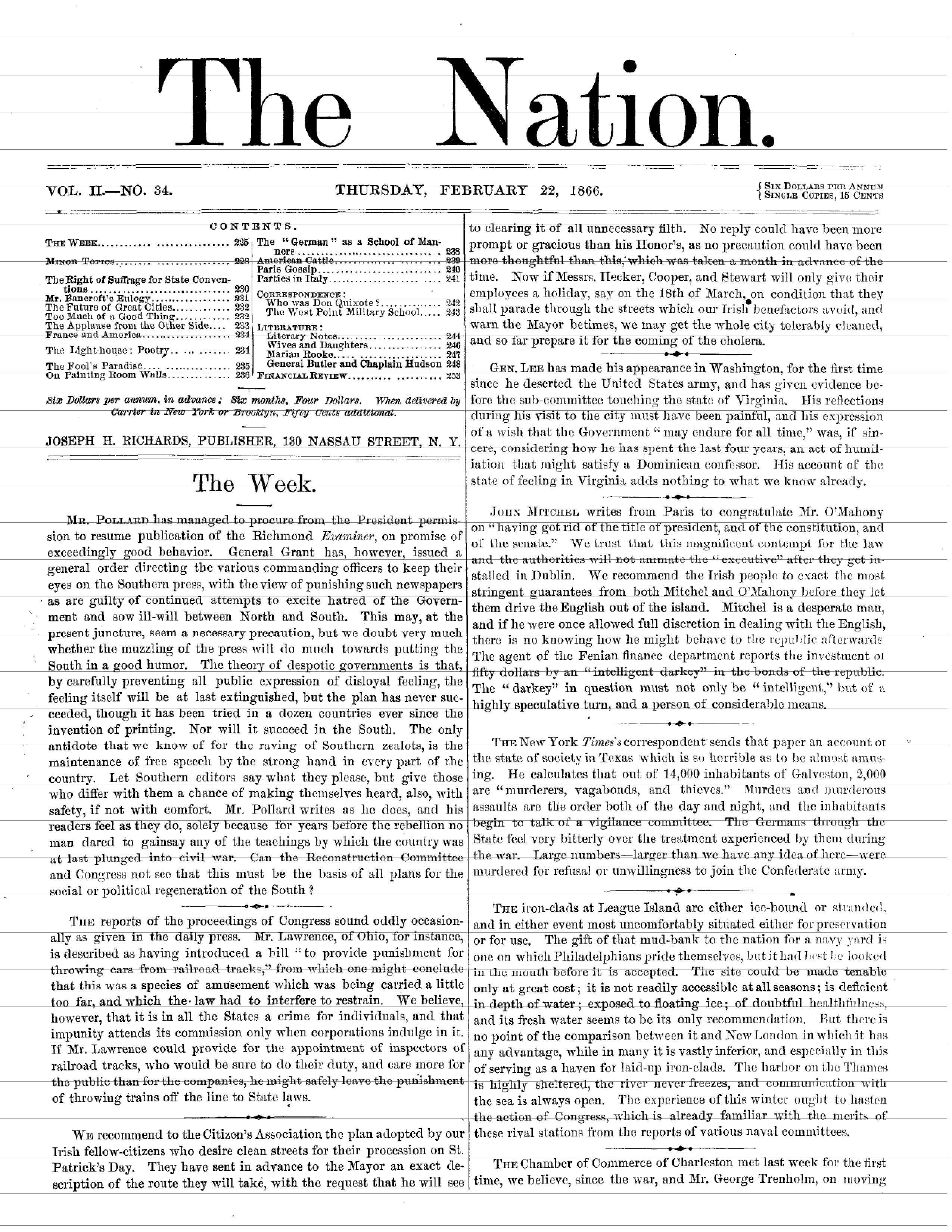
June 22. On this date in 1866, "The Nation" published an article titled "A New Religion" which concluded "Babism is much more in harmony with the subtle and imaginative genius of the Persian people than the Shiite Mohammedanism. The growing spirit of nationality makes their present religion and the present dynasty, both of which was imposed on them by foreign conquest, less and less acceptable every year. The hour when the Bab [sic] shall send word from Baghdad that the time has come for the Babists to take up arms again will be a very critical one for the present dynasty of Persia and for Shiite Mohammedanism."


June 22. On this date in 1866, The Nation published an article titled "A New Religion" which concluded with the following assertion...
Babism is much more in harmony with the subtle and imaginative genius of the Persian people than the Shiite Mohammedanism. The growing spirit of nationality makes their present religion and the present dynasty, both of which was imposed on them by foreign conquest, less and less acceptable every year. The hour when the Bab [sic] shall send word from Baghdad that the time has come for the Babists to take up arms again will be a very critical one for the present dynasty of Persia and for Shiite Mohammedanism.
June 22. On this date in 1923, a letter addressed on behalf of Shoghi Effendi by `Azizu'lláh S. Bahádur to a Bahá'í in New Zealand describes pioneers as "pure souls," "stars," "chosen people," and "like candles which, through their sacrificial efforts, are weeping their lives away in order to give light to the world and establish the purpose of their Lord and Saviour, which purpose is the salvation of mankind."

June 22. On this date in 1923, a letter addressed on behalf of Shoghi Effendi by `Azizu'lláh S. Bahádur to a Bahá'í in New Zealand describes pioneers as "pure souls," "stars," "chosen people," and "like candles which, through their sacrificial efforts, are weeping their lives away in order to give light to the world and establish the purpose of their Lord and Saviour, which purpose is the salvation of mankind."
22 June 1923
Miss. Margaret B. Stevenson, Clunie, Cowie Road, Parnell, Auckland, New Zealand
My dear Bahá'í sister,
Your beautiful letter of April 3rd written to the beloved Guardian of the Cause of God, our dear Shoghi Effendi was received. He was much impressed and charmed with the spirit of your letter which indicated deep devotion to and absolute dependence on the Holy Spirit of the beloved Master, `Abdu'l-Bahá.
He instructed me with a heart overflowing with love to answer your letter, conveying to you his high estimation for the beauty of the faith of the New Zealand friends and deep appreciation towards the splendid services of our dear Mr. and Mrs. Dunn who are so wonderfully blessed and assisted by the power of the Holy Ghost. He loves you all and prays for your happiness and spiritual growth.
It is true that your group is now still small, but he assures you that your group will before long grow larger and larger day by day. It has been always the case with the growth of every religion. Some pure soul or souls go to some land and sow the seeds of the heavenly teachings in the hearts of few who are most pure and so most receptive. The seeds will germinate and grow in them. The fruits of those seeds appear in the regeneration of the lives of those primary adherents. These primary adherents share the bounties they have received with other souls who through them obtain new life and light and in turn illumine other people.
The primary adherents are the stars of great magnitude in every land in the firmament of the Kingdom of God. They are the chosen people. They are like candles which, through their sacrificial efforts, are weeping their lives away in order to give light to the world and establish the purpose of their Lord and Saviour, which purpose is the salvation of mankind. Reflect upon the time of that great Saviour of mankind, His Holiness Jesus Christ! See how small the group of His disciples was! No matter how few the number of the disciples was, yet they through His power illumined the world. Our Era is similar to that, but through the development of humanity it is greater and through the evils of the material civilization and negligence of mankind our sacrifices must be greater. Divine light must make itself manifest in our daily life deeds.
In the early days of the appearance of our Saviour virtue was to save ourselves. When we are once established in our faith, then virtue is to save others. The three mottoes of education hold true in our case too.
First grow, then become and then contribute. We have developed; we have established ourselves; and now it is time to contribute to others. We have inexhaustible capital. The candles of our spiritual lives constantly weep away their lives in shedding light to the world, but they never become exhausted. For there is connection between our lives and that of Bahá'u'lláh and our beloved `Abdu'l-Bahá.
It cannot be described how much we long to see our dear New Zealand brethren and sisters. We hope the day will come when they can come to us and we to them. Meanwhile, we are praying at the Holy Threshold of our beloved Master for your success and happiness. We hope you will pray for us too. The effect of the prayers of the pure hearts is tremendously great.
Our dear Shoghi Effendi wants you not to look at your own capacity, but at the power of the Holy Ghost of God. He sends you all his loving greeting and tender affection.
With warm wishes and Bahá'í love I remain,
Your humble brother in His love, `Azizu'lláh S. Bahádur.
Friday, June 22, 2018
June 21. On this date in 1935, Shoghi Effendi wrote a letter to Edward Keith-Roach, governor of Jerusalem under the British Mandate of Palestine, as reported on page 281 of Amatu'l-Bahá Rúhíyyih Khánum's "The Priceless Pearl", in the chapter titled The Rise of the World Centre.

June 21. On this date in 1935, Shoghi Effendi wrote a letter to Edward Keith-Roach, governor of Jerusalem under the British Mandate of Palestine, as reported on page 281 of Amatu'l-Bahá Rúhíyyih Khánum's The Priceless Pearl, in the chapter titled The Rise of the World Centre.
In another letter, dated 21 June 1935, Shoghi Effendi, in calling Keith-Roach's attention to matters connected with a court case, says: "Any assistance you can find it possible to extend in this respect would, I am sure, be deeply appreciated by me no less than by the various Bahá'í Assemblies whose interests I represent." Throughout his ministry Shoghi Effendi always let it be known very clearly to officials that, although he was the Head of the Faith, behind him stood a great concourse of Bahá'ís in many countries, ready to back up, with all the power they possessed, his claims and demands; and in expressing his thanks, he very often included their sentiments of gratitude and appreciation along with his own.
June 21. On this date in 1845, the Báb returned to Shiraz after having completed the Hajj pilgrimage to Mecca with Quddús (Mullá Muḥammad ‘Alí-i-Bárfurúshí), who was the eighteenth believer in the Báb, and a black slave named Mubarak.

June 21. On this date in 1845, the Báb returned to Shiraz after having completed the Hajj pilgrimage to Mecca with Quddús (Mullá Muḥammad ‘Alí-i-Bárfurúshí), who was the eighteenth believer in the Báb, and a black slave named Mubarak.
On March 20, 1848, Mullá Ḥusayn-i-Bushru'i, who in 1844 had become the first person to become a follower of the Báb, visited the Báb at Maku prison, where the Báb was incarcerated. Subsequent to his visit, Mullá Ḥusayn-i-Bushru'i became involved in the Bábi uprisings. Under instructions from the Báb, Mullá Ḥusayn-i-Bushru'i unfurled a Black Standard in Mashhad, fulfilling an Islamic prophecy, and began a march with other Bábis. They were rebuffed at Barfurush and therefore made defensive fortifications at the shrine of Shaykh Tabarsí. Quddús arrived at the Shrine and became the commander of the Bábís upon his arrival. Mullá Ḥusayn-i-Bushru'i would die at the battle of Shaykh Tabarsí on February 2, 1849. Quddús himself became a prisoner and was being escorted to Tehran when, in Barfurúsh, the local population lynched him. The Báb was later executed on July 9, 1850.
June 21. On this date in 1968, the Universal House of Justice sent a message to all National Spiritual Assemblies announcing the creation of the Continental Board of Counselors.

June 21. On this date in 1968, the Universal House of Justice sent a message to all National Spiritual Assemblies announcing the creation of the Continental Board of Counselors.
The Universal House of JusticeIn 1951, Shoghi Effendi, as Guardian, appointed members to the International Bahá’í Council, naming Mason Remey as the Council's President and describing it as an embryonic international House of Justice.
21 June 1968
To all National Spiritual Assemblies
REJOICE ANNOUNCE MOMENTOUS DECISION ESTABLISH ELEVEN CONTINENTAL BOARDS COUNSELORS PROTECTION PROPAGATION FAITH THREE EACH FOR AFRICA AMERICAS ASIA ONE EACH FOR AUSTRALASIA EUROPE. ADOPTION THIS SIGNIFICANT STEP FOLLOWING CONSULTATION WITH HANDS CAUSE GOD ENSURES EXTENSION FUTURE APPOINTED FUNCTIONS THEIR INSTITUTION. CONTINENTAL BOARDS ENTRUSTED IN CLOSE COLLABORATION HANDS CAUSE WITH RESPONSIBILITY DIRECTION AUXILIARY BOARDS AND CONSULTATION NATIONAL SPIRITUAL ASSEMBLIES. HANDS CAUSE GOD WILL HENCEFORTH INCREASE INTERCONTINENTAL SERVICES ASSUMING WORLDWIDE ROLE PROTECTION PROPAGATION FAITH. MEMBERS AUXILIARY BOARDS WILL REPORT BE RESPONSIBLE TO CONTINENTAL BOARDS COUNSELORS. HANDS CAUSE RESIDING HOLY LAND IN ADDITION SERVING LIAISON BETWEEN UNIVERSAL HOUSE JUSTICE AND CONTINENTAL BOARDS COUNSELORS WILL ASSIST FUTURE ESTABLISHMENT INTERNATIONAL TEACHING CENTER HOLY LAND FORESHADOWED WRITINGS BELOVED GUARDIAN. DETAILS NEW DEVELOPMENTS BEING CONVEYED BY LETTER. FERVENTLY SUPPLICATING HOLY THRESHOLD DIVINE CONFIRMATIONS FURTHER STEP IRRESISTIBLE UNFOLDMENT MIGHTY ADMINISTRATIVE ORDER BAHÁ’U’LLÁH.
UNIVERSAL HOUSE OF JUSTICE
When Shoghi Effendi passed away in 1957 without having appointed a successor Guardian, as confirmed by a "Unanimous Proclamation of the 27 Hands of the Cause of God", the Hands of the Cause of God elected from among their own nine individuals who would serve as Custodians to help lead the transition of the International Bahá’í Council, into the Universal House of Justice.
In 1961 the International Bahá’í Council was changed to an elected body, with members of all National Spiritual Assemblies voting.
In 1963, the first Universal House of Justice was elected, and its members are elected every five years by members of each Bahá'í National Spiritual Assembly in the world. In practice, the Bahá’í electoral system most closely resembles council democracy as it still exists in Cuba, wherein individuals elect Local Spiritual Assemblies, who then elect National Spiritual Assemblies, who then elect the Universal House of Justice. With no politicking or partisanship allowed, there is little turnover in leadership and Universal House of Justice members almost invariably serve until retirement or death. New members are currently generally elected from the appointed institutions of the Bahá’í administration, particularly the International Teaching Centre. In fact, all of the current members of the Universal House of Justice previously served as members of the International Teaching Centre. In council democracies, these career bureaucrats were known as the nomenklatura.
With the eventual passing of the individual Hands of the Cause of God appointed by Shoghi Effendi and without a Guardian to appoint additional Hands, the Universal House of Justice saw the need for developing an institution for the purpose of performing the Hands' function of protection and propagation of the Faith.
In 1968 the Continental Board of Counselors was formed. The Counselors appoint Auxiliaries collectively referred to as Auxiliary Boards in smaller regional areas, who in turn appoint their own Assistants to work in localities.
Auxiliary Board Members for Protection are charged with watching over the security of the Bahá’í Faith, and Auxiliary Board Members for Propagation are responsible for working with the grassroots on the global Plans established by the Universal House of Justice. Originally, members of the Auxiliary Boards were appointed by and served under the Hands of the Cause of God who directed their efforts worldwide. The first members of the Auxiliary Boards were appointed in 1954, and they were divided into five distinct geographical regions
In 1973 the administrative branch called the Institution of the Counselors was formed. Also in 1973, the International Teaching Centre was first formed by the Universal House of Justice, and originally consisted of the 17 Hands of the Cause still living at that time, plus three Counsellor members. The number of Counsellor members was raised to four in 1979, to seven in 1983, and finally to the current nine in 1988. The Counsellor members of the International Teaching Centre are appointed by the Universal House of Justice to five-year terms that begin shortly after the International Convention and election of the Universal House of Justice.
Subscribe to:
Posts (Atom)